
The Case For Living Smaller
There's a quiet shift happening in how people think about home. Not louder, bigger, and more. But intentional, purposeful, and enough. The tiny home movement isn't just a design trend or a social media aesthetic. It's a growing body of evidence that smaller spaces often lead to fuller lives.
We know this because we've seen it with our own clients: the couple who stopped working weekends after dropping their overhead. The solo buyer who finally started hiking every Saturday because her home required almost nothing from her on Sunday mornings.
So whether you're curious, skeptical or quietly already convinced - here's the case for living smaller.
1. Your Finances Finally Have Room to Breathe
This is where most people start, and for good reason. The math on tiny home living is hard to argue with. Smaller homes cost less to buy, less to heat and cool, less to insure, and dramatically less to maintain. Studies show that over 68% of tiny home owners own their homes outright - compared to just 29% of traditional homeowners. That's not a small difference. That's the difference between spending your prime years paying a bank and actually building the life you want.
Lower housing costs don't just save you money. They give you options: working fewer hours, traveling more, retiring earlier, investing in experiences rather than square footage. Financial freedom and living small aren't just correlated - for many people, one is the direct result of the other.
(Source: Tiny House Living by Ryan Mitchell (2014), also referenced on thetinylife.com)
2. Less Stuff, More Living
Here's the thing about a bigger home: it fills up. Closets become storage units. Spare rooms become dumping grounds. And all of it - every item you own - quietly demands something from you. Your attention. Your time. Your mental bandwidth.
Tiny home living forces a different relationship with stuff, and research backs up what many small-space dwellers already know: fewer possessions lead to lower anxiety and less stress. When every item in your home has to earn its place, you stop accumulating things that don't matter - and you start protecting time for the things that do.
As Jay Shafer, widely regarded as the godfather of the tiny house movement, put it simply: “waste is ugly; efficiency is beautiful.”
You don't need a 400-square-foot home to adopt this mindset. But smaller spaces do have a way of making it feel non-negotiable - in the best possible way.
3. You'll Actually Live Outdoors
There's a not-so-secret truth about tiny home living: the outdoors becomes your living room. When your interior space is intentional and compact, you naturally start extending your life outward - onto porches, into yards, along trails, beside water. Many tiny home dwellers report spending more time outside than in.
That's not a sacrifice. That's the point.
Time outdoors is consistently linked to reduced stress, improved mood, and better overall wellbeing. And when your home is situated somewhere beautiful (near water, in the trees, at the edge of a mountain) the outside isn't something you access. It's something you live in.
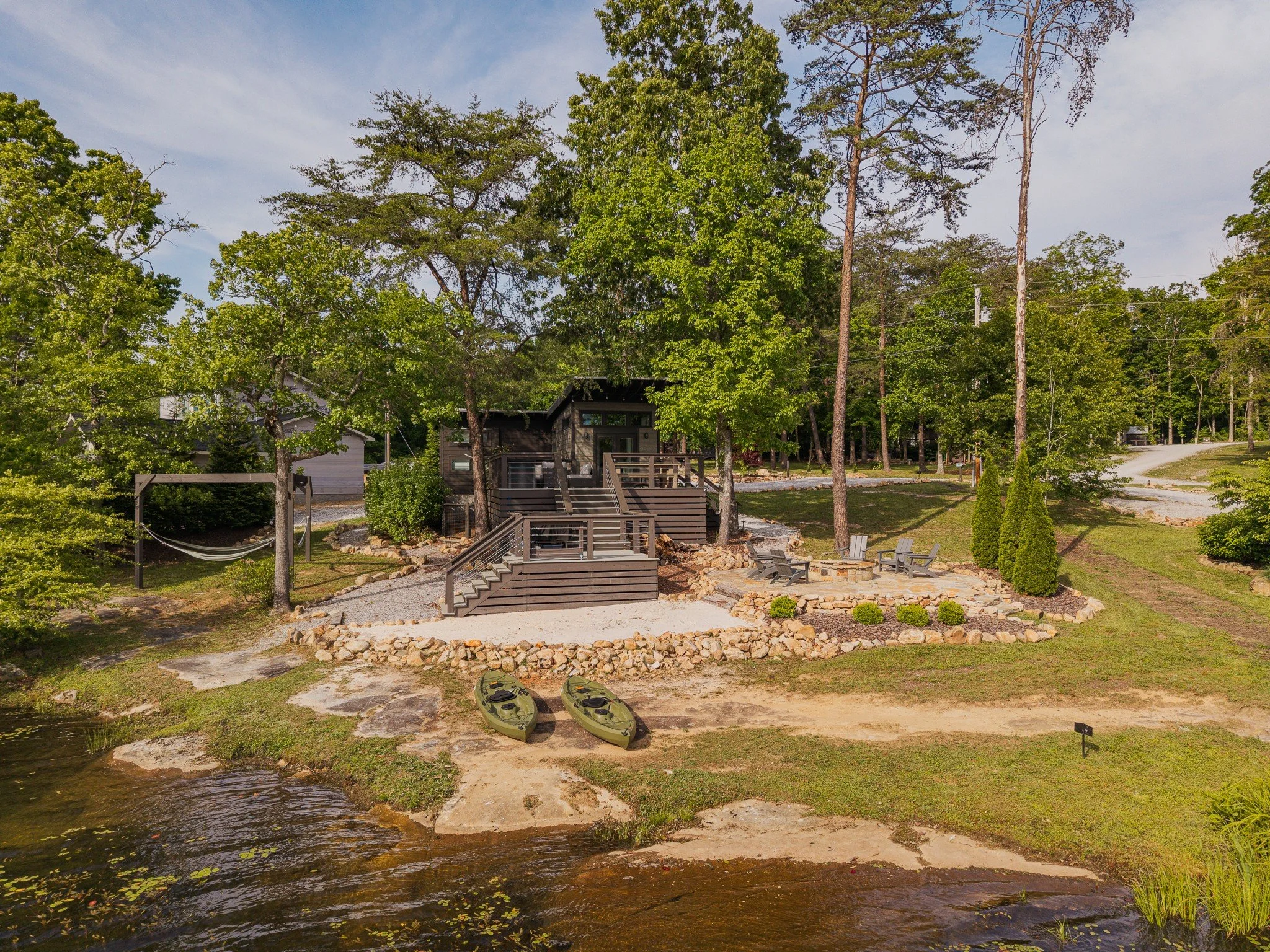
Speaking of which: If you've been dreaming about what that actually looks like, we've got something worth seeing. 19 Lillypad Lane in Tracy City, Tennessee — tucked into a quiet point at The Retreat at Waters Edge on the Cumberland Plateau — is exactly this kind of property. A fully furnished, turnkey lakefront home just 90 miles from Nashville, with a hammock triangle in the trees, a stone fire pit overlooking the water, a sandy beach, and direct access to kayaking, paddleboarding, and fishing. The outdoors at Lillypad Lane isn't a feature. It's the whole experience.
4. Intentional Spaces Actually Work Harder for You
Tiny homes are often better-designed homes. When square footage is limited, every inch has to earn its place - and that discipline produces spaces that feel curated, functional, and genuinely livable. No wasted hallways. No rooms that exist just to store things. No square footage you're paying for but never using.
Thoughtful design in small spaces means multifunctional furniture, smart storage, abundant natural light, and layouts that move well. When done right, a small home doesn't feel small, it feels exactly right.
This is what the tiny home movement calls intentional living: designing your environment to support the life you actually want, instead of defaulting to the life a bigger floor plan would suggest.
5. The Environmental Case Is Real
Research from Virginia Tech found that people who downsized to tiny homes reduced their ecological footprint by an average of 45% - and the ripple effects were broader than expected. Tiny home dwellers also shifted toward more sustainable habits: eating locally, wasting less, buying with more intention.
Smaller homes use fewer resources to build, less energy to heat and cool, and generate fewer of the impulse purchases that come with having more room to store things. If living in alignment with your values matters to you, the square footage of your home is a lever you might not have fully considered.
6. Quality of Life Goes Up, Not Down
This is the part that surprises people most. The idea of going smaller conjures images of sacrifice - giving things up, making do, cramming in. But study after study, and story after story from tiny home dwellers, tells a different story.
People who downsize report feeling less stressed, more present, more financially secure, and more connected to the people and experiences they care about most. The tiny home lifestyle, at its core, is a shift from accumulating to experiencing — and that shift, it turns out, is where most of the good stuff lives.
So, What Does This Look Like in Real Life?
Sometimes it looks like a cabin in the mountains. Sometimes it's a lakefront retreat you use on weekends and rent out the rest of the time. Sometimes it's a primary home that finally lets you stop working overtime to maintain something that was too big to begin with.
If you're curious what the small-living life could look like for you - whether as a full-time pivot or a secondary property that pays for itself - we'd love to talk through it.
And if you want to see it in person first, 19 Lillypad Lane is ready for you. 561 square feet of intentional lakefront living in Tracy City, Tennessee. Fully furnished. Turnkey. Kayaks included. Priced at $499,000, with short-term rental management available through Retreat Vacations.
It's the kind of place that makes the case better than any blog post could.
Ready to explore what living smaller could look like for you? Reach out to the Living True Home Group — we're in your corner.